Low vision can significantly affect independence and overall quality of life. Many patients in Delhi NCR and Gurgaon seek expert care when they experience difficulty reading, recognising faces, navigating unfamiliar spaces, or performing daily activities despite using regular spectacles. A qualified low vision specialist focuses on understanding functional vision challenges and provides personalised clinical solutions to improve usable vision.
Individuals looking for reliable care often consult a low vision eye doctor when routine eye treatments are no longer sufficient. The clinical approach involves understanding how vision loss affects daily function and offering structured, evidence-based strategies to improve visual performance.
At Dr. Digvijay Singh’s clinic, patients benefit from advanced clinical assessment, specialised low vision glasses, AI-based visual support programs, and personalised rehabilitation strategies. The objective is not only to improve vision but also to help patients regain confidence and independence in everyday life.
Common Causes of Low Vision Problems
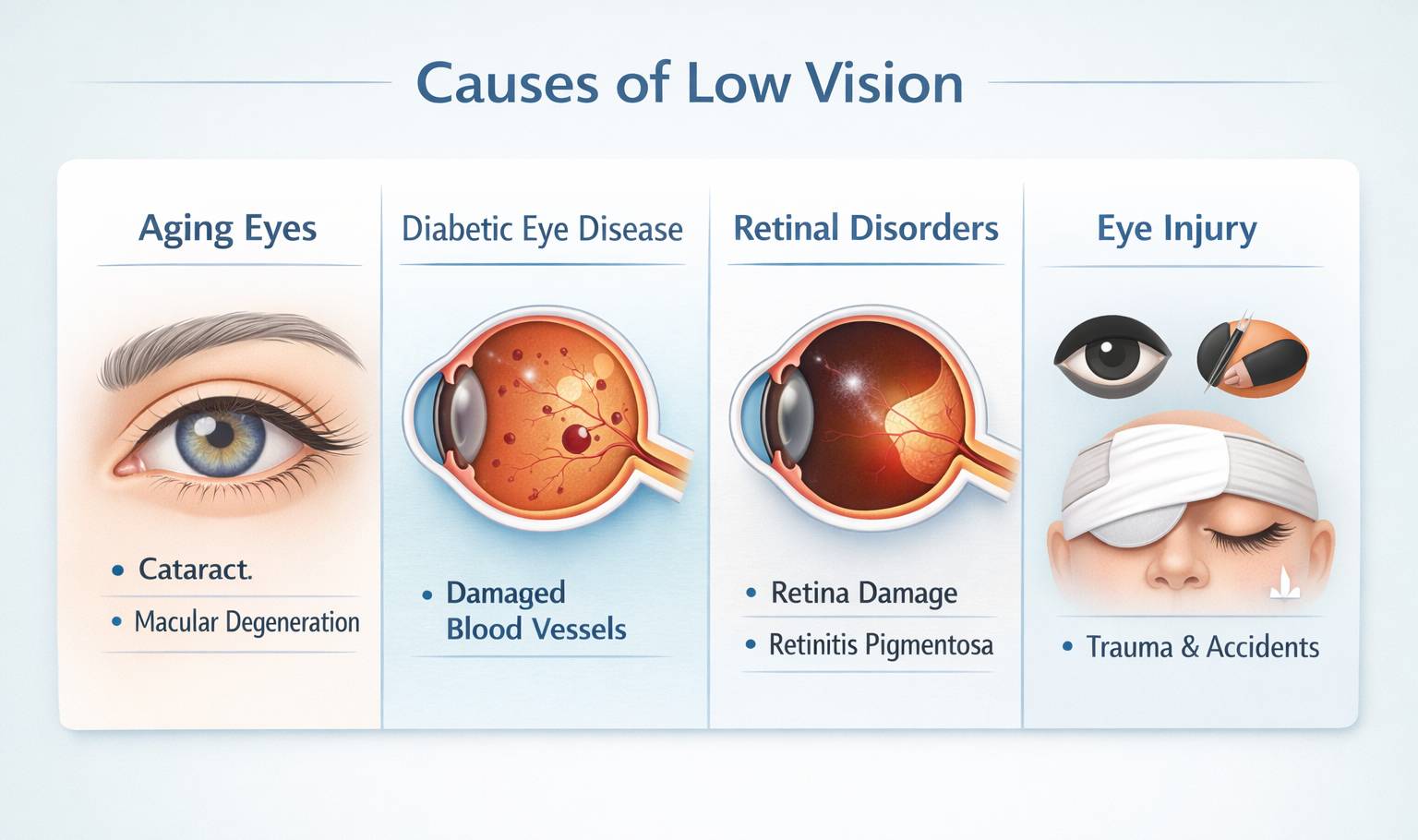
Several factors can contribute to low vision, and knowing these helps both the patient and the low vision specialist optometrist. Some causes are sudden, some grow slowly. Each comes with its own story and small daily hurdles.
Age-Related Changes: After a certain age, some people begin noticing things are not as clear, especially with fine work or reading. Getting a check-up from a low vision eye doctor helps.
Eye Injuries: Blunt trauma or accidents can harm the structures inside the eye. These injuries may heal, but sometimes vision loss lingers and becomes low vision for the person.
Inherited Eye Diseases: Some eye issues run in families. Diseases like retinitis pigmentosa grow over the years. The only way to keep ahead of it is to stick with a low vision specialist who checks regularly.
Diabetes-Related Damage: High sugar levels for many years can damage the blood vessels in the eyes, leading to low vision disability. Regular checks with a low vision specialist optometrist are important for early help.
Different Types of Low Vision and Their Impact
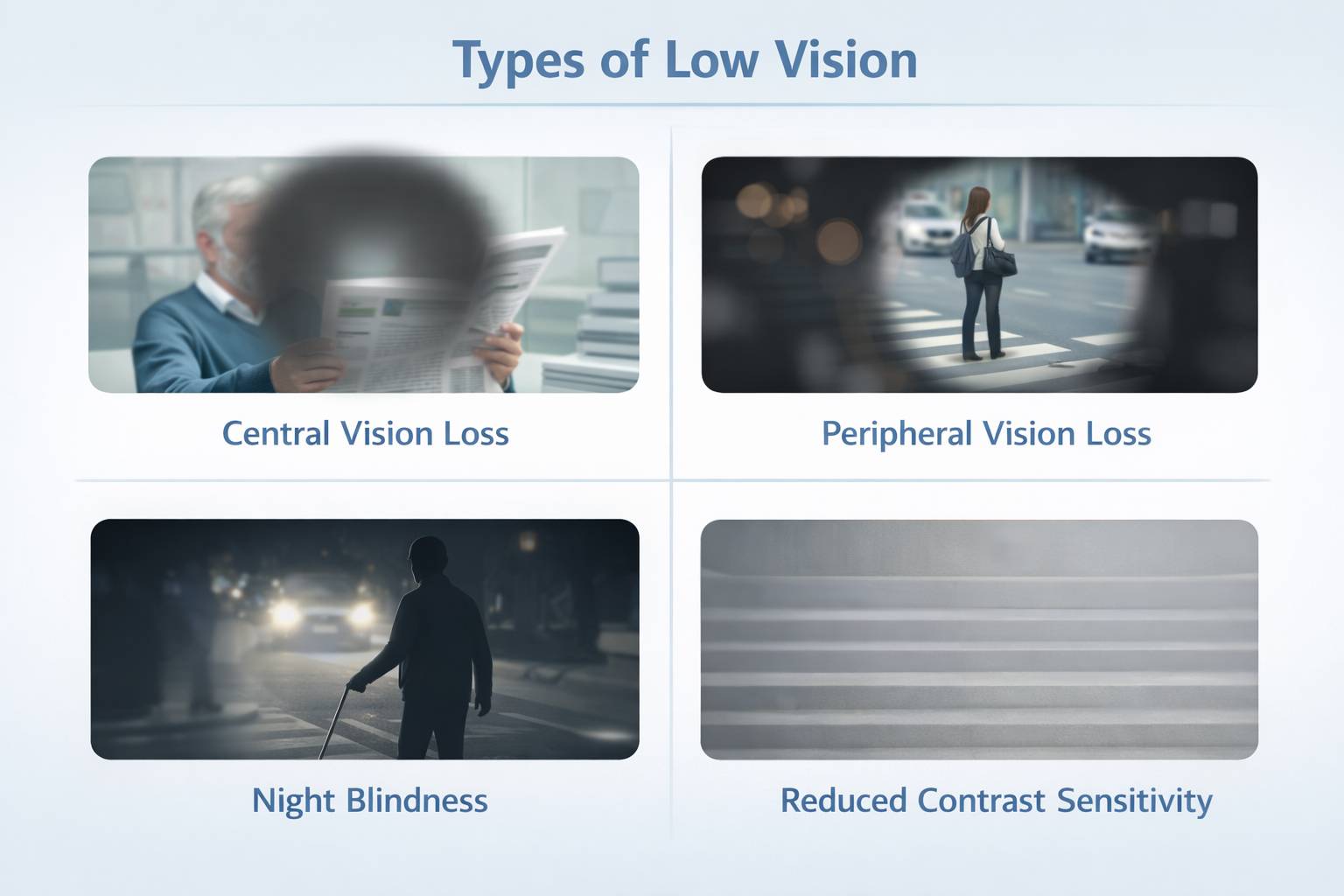
Low vision does not affect everyone in the same way. A thorough evaluation helps the low vision eye doctor understand the pattern of vision loss and recommend targeted support.
1. Central Vision Loss
This is when the main, focused part of seeing becomes blurry or blocked, making reading or detail work tough. People often struggle most with faces and words.
2. Peripheral Vision Loss
Some people can see details in the centre, but the side (or field) of vision starts to close in. This makes driving or moving in crowded places difficult and sometimes frightening.
3. Night Blindness
In some cases, low eye vision worsens when the light grows dim or at night. The cause may be an inherited disease or ageing changes, making outdoor movement after sunset a challenge.
4. Reduced Contrast Sensitivity
Here, nothing is sharply wrong, but it’s hard to notice edges, steps, or color changes. This is risky for falls at home or outside.
Diagnosis of Low Vision: Tests & Procedures
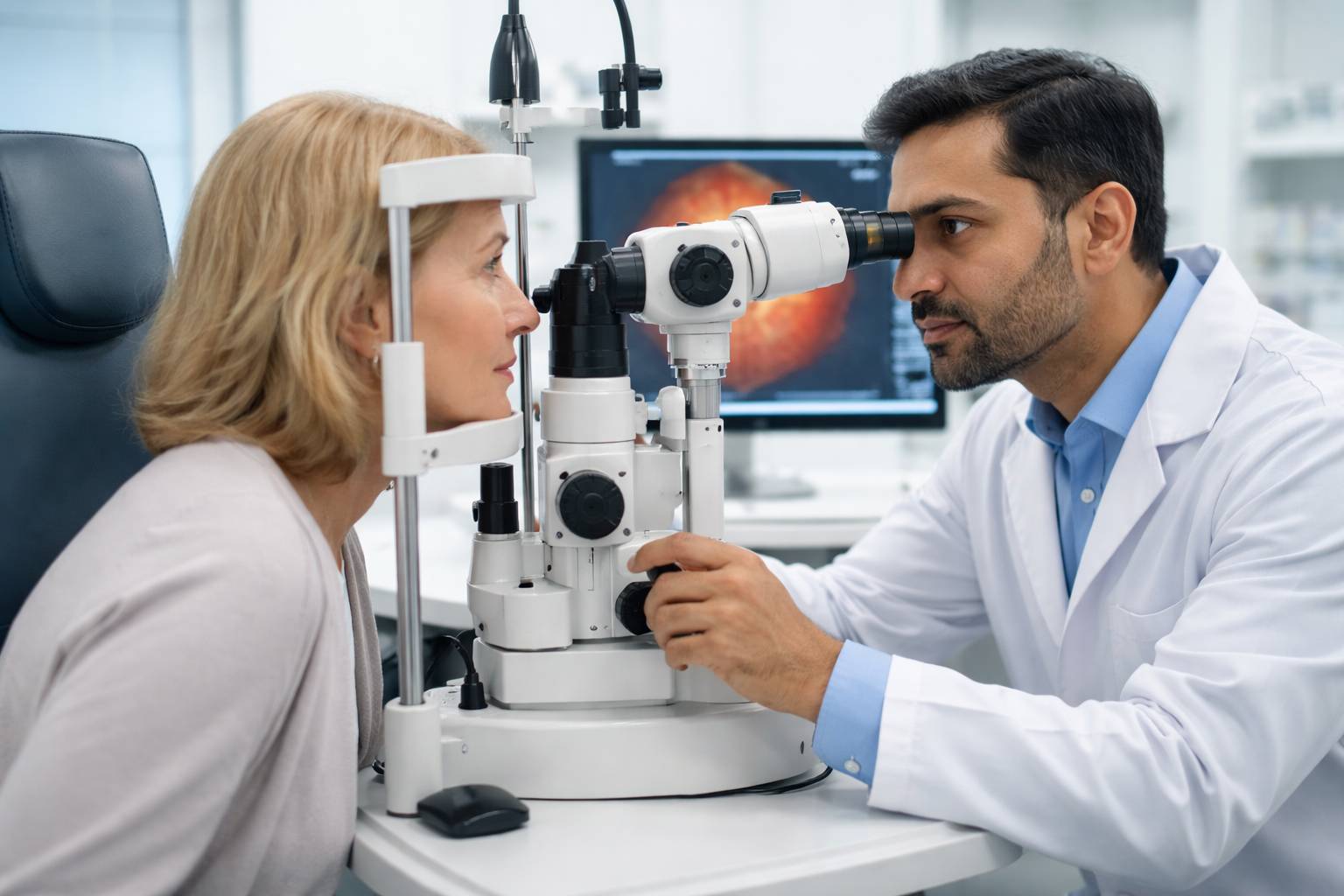
A low vision specialist goes step by step, using gentle yet thorough methods to understand the changes. Diagnosis needs careful listening and precise tests tailored to low vision treatments.
Visual Acuity Test: Measures how clear small letters or shapes look from a set distance. This helps set a baseline for understanding what low vision is for the individual.
Visual Field Examination: Checks the whole window of sight, including sides, top, and bottom. Some loss can stay unnoticed until tested by an experienced low vision specialist.
Retinal Imaging: Photos or scans of the back part of the eye, called the retina, show any possible reason behind vision trouble or low vision disability.
Contrast Sensitivity Test: Not all eyesight problems are about clarity. This test checks if the eye can spot slight shade changes, which matters for daily movement in the real world.
These evaluations allow the low vision specialist optometrist to develop a targeted treatment and rehabilitation plan.
Low Vision Treatment Options for Better Sight

Managing low vision needs simple, personalised choices, not just medication or surgery. Each approach is shaped by what the patient finds hardest. A good low vision eye doctor helps people explore aids that fit their lives. We offer specialised low vision glasses and AI-based visual support programs to help patients better manage functional vision.
1. Magnifying Devices
Different magnifiers or telescopes can help with close tasks, such as reading or stitching, making daily life simpler for many people with low eye vision.
2. Special Glasses & Filters
A low vision specialist optometrist might suggest advanced specialised low vision glasses, high-contrast lenses, bright colours, or customised filters that reduce glare and improve visual clarity indoors and outdoors.
3. AI-Based Vision Support Programs
The clinic also integrates AI-powered visual training programs designed to help patients enhance visual processing, improve adaptation, and maximise remaining vision for practical daily use.
4. Adaptive Lighting Solutions
Sometimes, stronger lights or changes in room setup can help people see labels, stoves, or medicine packets better. It is a simple step that a low vision eye doctor may recommend for the home.
5. Rehabilitation & Training
Rehabilitation may include orientation techniques, assistive strategies, and sensory adaptation methods to support independent daily functioning and long-term confidence.
About Dr. Digvijay Singh
Dr. Digvijay Singh is an experienced ophthalmologist and pediatric eye specialist with expertise in comprehensive eye care and low vision management. With years of clinical experience in diagnosing and managing complex visual conditions in both children and adults, he focuses on personalised treatment plans using modern diagnostic tools, specialised low vision devices, and structured rehabilitation therapies.
He follows evidence-based clinical protocols and a patient-centred approach to help individuals improve functional vision and maintain long-term visual independence.
Schedule a Consultation Today with Dr. Digvijay Singh for Low Vision Care

If vision feels progressively blurred or daily tasks are becoming difficult, professional guidance can make a meaningful difference. Dr. Digvijay Singh is widely regarded as a trusted low vision specialist in Gurgaon and Delhi NCR.
Patients from Gurgaon, Delhi NCR, and nearby areas seek consultation for structured low vision care at the clinic. We offer a comprehensive and personalised approach, combining specialised low vision glasses, AI-based visual programs, and structured rehabilitation care.
In addition, we provide exclusive therapies to support patients experiencing low vision following stroke, helping them improve functional vision and adapt more effectively.
Whether the goal is reading comfortably, moving confidently outdoors, or recognising faces clearly again, structured low vision care can help restore independence. Often, positive change begins with a single consultation.
FAQ About Low Vision
Q.1 What is low vision?
Low vision refers to reduced eyesight that cannot be fully corrected with glasses, contact lenses, or surgery. Individuals with low vision may experience blurred vision, reduced contrast, or limited visual fields. With proper low vision care, many people can continue to live independently.
Q.2 Why choose low vision care?
Low vision care focuses on practical solutions that help individuals function better in daily life. It combines visual aids, training, and personalised guidance to improve confidence, safety, and independence.
Q.3 What are the different stages of vision loss?
Vision loss often progresses gradually. Early stages may involve difficulty reading or recognising faces. As it advances, sensitivity to light, contrast, and detail may reduce further. Early consultation with a low vision specialist helps ensure timely support.
Q.4 How does low vision affect daily life?
Low vision can affect reading, cooking, grooming, navigation, and social interaction. With appropriate aids and professional guidance, most individuals can adapt successfully and maintain an active lifestyle.
Q.5 How does nutrition affect eye health?
A balanced diet rich in green vegetables, fruits, nuts, and essential nutrients supports long-term eye health. Poor nutrition can increase the risk of several eye conditions.
Q.6 How does low vision affect reading and writing?
Reading and writing can become challenging due to reduced clarity or contrast. Magnifiers, large-print materials, and specialised low vision devices help maintain these activities.
Q.7 What are the symptoms of low vision?
Common symptoms include blurred vision, difficulty seeing in low light, trouble recognising faces, faded colours, reduced contrast, and difficulty reading standard print. Early evaluation by a low vision eye doctor is recommended.
![DigvijayProfile[1]](https://drdigvijaysingh.com/wp-content/uploads/2017/11/DigvijayProfile1.jpg)