
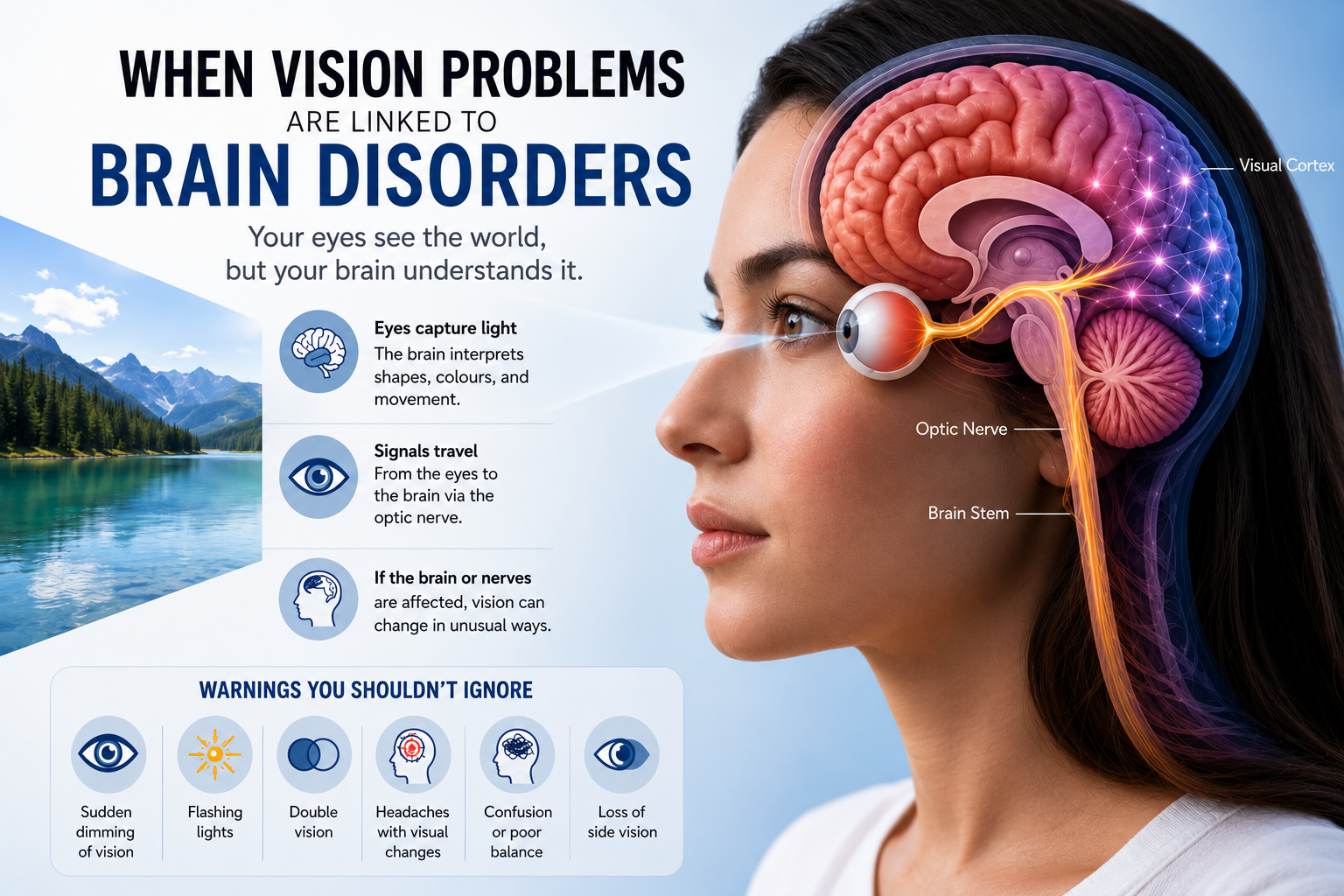
When Vision Problems Are Linked to Brain Disorders
Overall Summary
In this article, we explain how vision depends on brain function. Eyes capture light, but the brain interprets images. When nerves or blood vessels face trouble, sight changes in weird ways. People ignore dimming or shadows.
These signs indicate stroke, pressure, or inflammation instead of simple eye fatigue. Dr Digvijay Singh notes that double vision and colour changes require deep testing. Early care helps manage these conditions. Understanding this link protects long-term health.
Key Takeaways
- Vision requires the brain and eyes working in tandem for clarity.
- Sudden dimming or shadows may indicate eye, nerve, or circulation problems and should be assessed urgently.
- Double vision indicates pressure or weakness within the skull pathways.
- Stress mimics physical illness by creating tunnel feelings and shakes.
- Migraine auras require checks to rule out more serious events.
- Medical experts must evaluate persistent changes to protect future health.
Introduction
Many people assume vision problems always originate in the eyes. That is not always true. The brain also controls how we see, focus, judge distance, and read movement. When a nerve, blood vessel, or brain area is disturbed, vision may change in strange ways.
A person may ignore it at first, thinking it is tiredness. Yet some symptoms need attention. Knowing the link between the brain and sight can help early care, lower fear, and guide people toward the right medical support in time.
Table of Contents |
How the Brain Helps Us See
The eyes collect light, but the brain gives meaning to that light. It interprets shape, colour, motion, and spatial relationships. It also joins signals from both eyes into one clear picture.
If the brain is affected, a person may notice:
- Blurred images
- Trouble reading lines
- Poor balance while walking
- Missing side vision
- Slow response to movement
These changes can happen even when the eyes look normal in a basic checkup.
Signs People Often Miss
Some symptoms arrive softly. They may come and go, which makes them easy to dismiss. A person may think stress or sleep loss is the reason.
Common warning signs include:
- Sudden dimming of sight
- Flashing lights
- Seeing shadows
- Poor depth judgment
- Short spells of confusion
Some people search for vision problems symptoms after these episodes begin. That search often starts because the change feels unusual, not painful.
Nerve Damage and Signal Problems
The optic nerve carries messages from the eye to the brain. If the optic nerve becomes inflamed, compressed, or damaged, vision can decline rapidly.
Doctors may check for:
| Sign | What It May Mean |
| Colour looks dull | Nerve signal weakness |
| Pain on eye movement | Inflammation |
| Sudden blur | Reduced nerve function |
| One side missing | Brain pathway issue |
This area is one reason many types of vision problems need deeper testing, not only glasses.
When Seeing Two Images Happens
Sometimes both eyes work, yet the brain cannot align the image well. Muscles, nerves, or brain centres that guide eye movement may be affected.
A double vision problem may appear when:
- Looking to one side
- After a head injury
- During nerve weakness
- With raised pressure inside the skull
This symptom should not be ignored, especially if it begins suddenly.
Pain in the Head with Sight Changes
The head and eyes share many nerve pathways. Because of that, pain and visual trouble may come together.
People report headache and vision problems, such as:
- Blurred spots
- Bright zigzag lines
- Eye strain
- Pressure behind the eyes
- Brief dim vision
Sometimes the cause is simple. Sometimes it points to migraine, nerve swelling, or blood pressure changes.
Stress, Fear, and Functional Changes
The mind can affect sight more than many expect. During panic or long stress, focusing may become hard. Vision may feel foggy or distant.
Some people describe anxiety causing vision problems when they are under stress. This can include:
- Tunnel feeling
- Light sensitivity
- Shaky focus
- Feeling unreal or detached
Still, stress should not be used as the first answer until medical causes are checked.
Migraine and Temporary Visual Episodes
Migraines do not always mean strong head pain. Some people get a visual aura first, or only aura.
With migraine vision problems, a person may see:
- Flashing shapes
- Blind spots
- Wavy lines
- Broken patterns
These episodes often pass, but first-time attacks need assessment. Stroke and migraine can look similar in early moments.
Can Dryness Be the Reason?
Not every symptom comes from the brain. The surface of the eye matters too. Dryness can disturb the tear film and make sight unstable.
Many ask, can dry eyes cause vision problems? Yes, they can cause:
- Blur that clears after blinking
- Burning
- Gritty feeling
- Watering eyes
Yet if symptoms stay after lubrication or rest, more checks may be needed.
Looking at the Main Causes
Doctors try to sort the full picture before naming the issue. The causes of vision problems linked with the brain may include stroke, nerve inflammation, tumours, trauma, migraine, infection, or pressure changes.
There are also different types of vision problems, such as field loss, poor tracking, image split, light sensitivity, and brief blackout spells. Each pattern gives clues. Timing matters. Sudden symptoms need quick care, while slow changes still deserve attention.
About Dr Digvijay Singh
I am Dr Digvijay Singh, an ophthalmologist with experience in paediatric ophthalmology, strabismus, glaucoma, and neuro-ophthalmology. I am trained for many years at the AIIMS, New Delhi, and later worked as a consultant before building my own speciality centre.
I have attended many national and international conferences and have more than 70 publications, chapters, and a book. People seeking an eye specialist in Gurgaon often look for doctors with experience in both eye disease and nerve-related sight disorders.
Also Read: What is Glaucoma? Symptoms, Causes & Prevention
Conclusion
Vision changes can be small at first, then turn serious without warning. Because sight depends on both the eyes and the brain, unusual symptoms should be taken with care. Brief blur, image splitting, flashing lights, or side vision loss may signal something beyond routine eye strain.
Early review often makes treatment smoother and reduces worry. No one should guess the cause alone. When symptoms repeat, worsen, or start suddenly, proper medical assessment is the safest and wisest next step for lasting eye health.
FAQs
Q1. How do brain issues affect my eyesight?
Ans. Brain regions decode colours and motion. If these areas face damage, you might lose side vision or see blurry shapes. These symptoms may occur even when a routine eye examination appears normal.
Q2. What causes sudden double vision issues?
Ans. Double vision happens when brain signals fail to align images. This suggests nerve weakness or high pressure inside the skull. Rapid changes require a doctor to assess the brain pathways.
Q3. Can high stress levels change my vision?
Ans. Extreme stress triggers tunnel vision or light sensitivity. The mind makes sight feel distant or shaky during panic. Specialists must check physical health before deciding that anxiety is the cause.
Q4. What are typical migraine visual aura signs?
Ans. Migraine auras include flashing patterns, blind spots, or zigzag lines. These episodes appear without headache. Doctors must check these events because they mimic symptoms of stroke or nerve inflammation.
Q5. Does dry eye syndrome affect vision clarity?
Ans. Tear film issues create a brief blur that vanishes after blinking. Dryness causes burning or gritty feelings. If lubrication fails to help, the problem stems from nerves or brain signals.
Recent Comments