
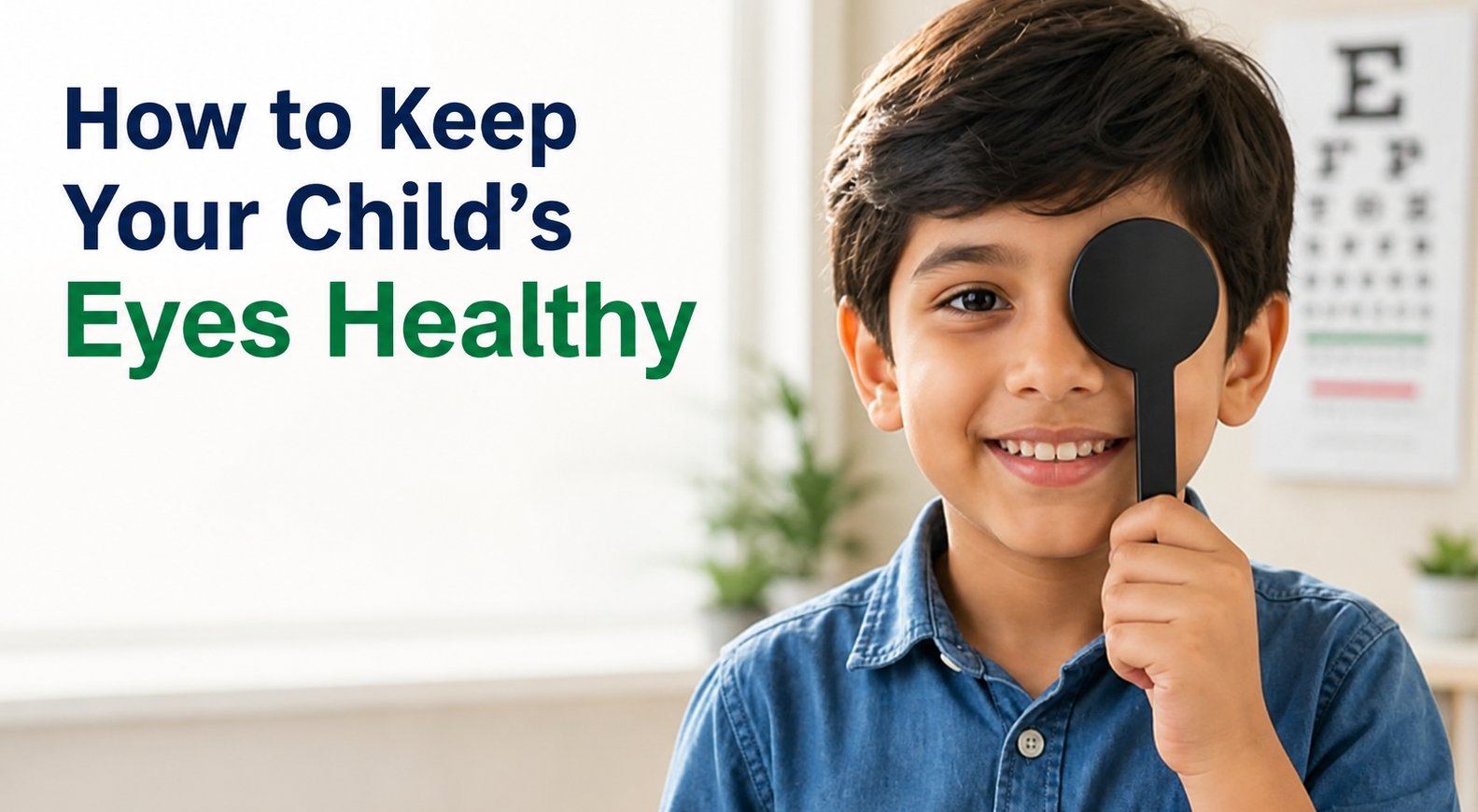
How to Keep Your Child’s Eyes Healthy: A Complete Guide
Overall Summary
In this article, we will discuss simple ways to protect a child’s eyesight through daily habits, such as clean hands, balanced meals, sleep, outdoor play and smart screen limits. It explains warning signs like squinting, headaches, watering and close sitting.
Home checks can spot trouble early. Timely eye exams and calm routines help children read, play, and learn with comfort and clear vision for many growing years with stronger focus, better school ease, less strain each day and steadier family care habits at home.
Key Takeaways
- Clean hands and fresh towels lower common eye irritation risks.
- Reading needs good light and a steady sitting posture.
- Screen breaks every twenty minutes reduce strain and dryness.
- Outdoor play supports distance focus and body movement daily.
- Sleep, water, and mixed meals support eye comfort.
- Squinting, headaches, redness, or close sitting need eye checks.
Introduction
Every child deserves clear sight for reading, play, and learning. Parents often notice height, weight, or teeth first, yet eyes need the same care. Good habits started early can lower stress and help with comfort in school years. This guide explains simple home steps, warning signs, and when to seek help.
It is written for busy families who want good advice that works each day and keeps vision steady as children grow with calm routines and wise choices, always softly, safely ahead together for future years to come.
Table of Contents |
Daily Habits for Healthy Eyes
Small habits matter more than costly products. Children learn by copying adults, so family routine helps a lot.
- Remind them not to rub their eyes with dirty hands.
- Wash your hands before touching your face.
- Use clean towels and pillow covers.
- Keep pencils, toys, and sharp items away from eyes.
- Read in proper light, not in dim corners.
- Sit with a straight posture during homework.
These steps look simple, but they reduce irritation and common infections.
How to Keep a Child's Eyes Healthy
Children need guidance because they do not always feel strain early.
- Follow the 20-minute break rule during study or screens.
- Ask them to blink often while using devices.
- Keep books around one forearm's distance away.
- Use natural daylight for reading when possible.
- Speak gently if they complain of blurred vision or headache.
A child may hide discomfort to continue games or cartoons, so regular checking is wise.
Which Food is Good for Eyesight
Food does not work instantly, yet it supports eye tissues over time.
- Carrots, pumpkin, spinach, peas, and sweet potato
- Eggs and milk, if suitable in the diet
- Nuts and seeds in small age-safe portions
- Fresh fruits with colour, such as mango or orange
- Enough water throughout the day
Serve mixed meals instead of forcing one “eye food.” Balance helps more than any single item.
Screen Rules With Eye Health Tips
Screens are part of modern study, so balance is better than fear.
- Keep screens a little below eye level.
- Avoid very bright rooms against dark screens.
- Do not allow devices close to the face.
- Pause every twenty minutes and look far away.
- Stop screens at least one hour before sleep.
Dryness, blinking less, and tired focus often come from long use without breaks.
Outdoor Time and How to Take Care of Your Eyes
Time outside helps children use distance vision and move their bodies, too.
- Daily outdoor play in safe daylight is useful.
- Use caps or shade in harsh sun.
- Choose open play over only indoor screen games.
- Watch for dust, smoke, or strong wind.
Even a short walk, cycling, or park time can refresh tired eyes after study hours.
Sleep, Cleanliness, and Vitamins For Healthy Eyes
Sleep repairs the body, and the eyes also rest during sleep. Many children simply need a better routine.
- Keep fixed sleep and wake times.
- Remove screens before bed.
- Clean face after outdoor play.
- Change bed linen often.
- Ask a doctor before giving supplements.
If the diet is poor, a doctor may advise on nutrients. Do not start tablets on your own.
Signs That Need Attention and Tips For Better Eyesight
Please do not ignore repeated complaints. Children may describe problems in odd ways.
- Sitting too close to the television
- Squinting often
- One eye is turning in or out
- Frequent headaches after reading
- Watering, redness, or light sensitivity
- Holding books too near
- Poor interest in drawing or reading
Early review can prevent school trouble and daily stress.
Simple Checkup Guide for Parents
Use this home chart once in a while. It is not a diagnosis, only a reminder.
| Area to Notice | What to Watch |
| Reading habit | Moves the book very close |
| Eye comfort | Rubs eyes often |
| Focus | Misses words or lines |
| Alignment | One eye drifts |
| Outdoor play | Avoids ball games |
| Complaints | Headache or blurred |
If two or more signs repeat, arrange a proper examination.
About Dr Digvijay Singh
I am Dr Digvijay Singh, an ophthalmologist & eye specialist with a focus on Paediatric ophthalmology, Strabismus, Glaucoma, and Neuro-ophthalmology. I am trained in New Delhi and spent around twelve years in advanced clinical learning and patient care.
Later, I worked as a consultant before building my own speciality centre. I have taught at national and international conferences. With more than seventy publications, chapters, and a book, I have added meaningful academic work to eye care.
Conclusion
Children rarely say, “I cannot see well.” They may just avoid books, blink more, or lose focus in class. That is why parents should watch small changes and keep simple routines at home. Good sleep, balanced meals, outdoor play, clean habits, and timely checkups often make a real difference.
If something feels unusual, do not wait too long. Early care is kinder than late treatment. A calm approach, done daily, helps children grow with comfort, confidence, and a clear vision for many bright years ahead.
Also Read: What Is Squint (Strabismus) and How Is It Treated in Children?
FAQs
Q1. How can I protect my child’s eyes during study and screen time?
Ans. Children need breaks during reading and screen time. Use the twenty-minute rule, ask them to blink often, and keep books one arm's distance away each study session for comfort daily.
Q2. Why does my child keep rubbing their eyes often?
Ans. Frequent rubbing may come from dryness, dust, allergy, or tired focus. Check hand hygiene, reduce screen time, and seek care if redness stays for days or pain starts again soon.
Q3. What foods help improve children’s eye health?
Ans. Balanced meals support eye tissues over time. Serve spinach, carrots, eggs, milk, seeds, mango, citrus, and water. Avoid forcing one food alone every single day for results, and later steady growth.
Q4. When should I take my child for an eye checkup?
Ans. When should a child get an eye test? Arrange a visit if squinting, headaches, close sitting, watering, or blurred vision repeat. School-age children also need routine checks when advised.
Q5. Can outdoor play help my child’s eyesight?
Ans. Daily outdoor time lets children use distance vision and move more. Choose parks or walks, use shade, and avoid smoke, dust, and harsh wind when possible for regular comfort.
Recent Comments